.webp)
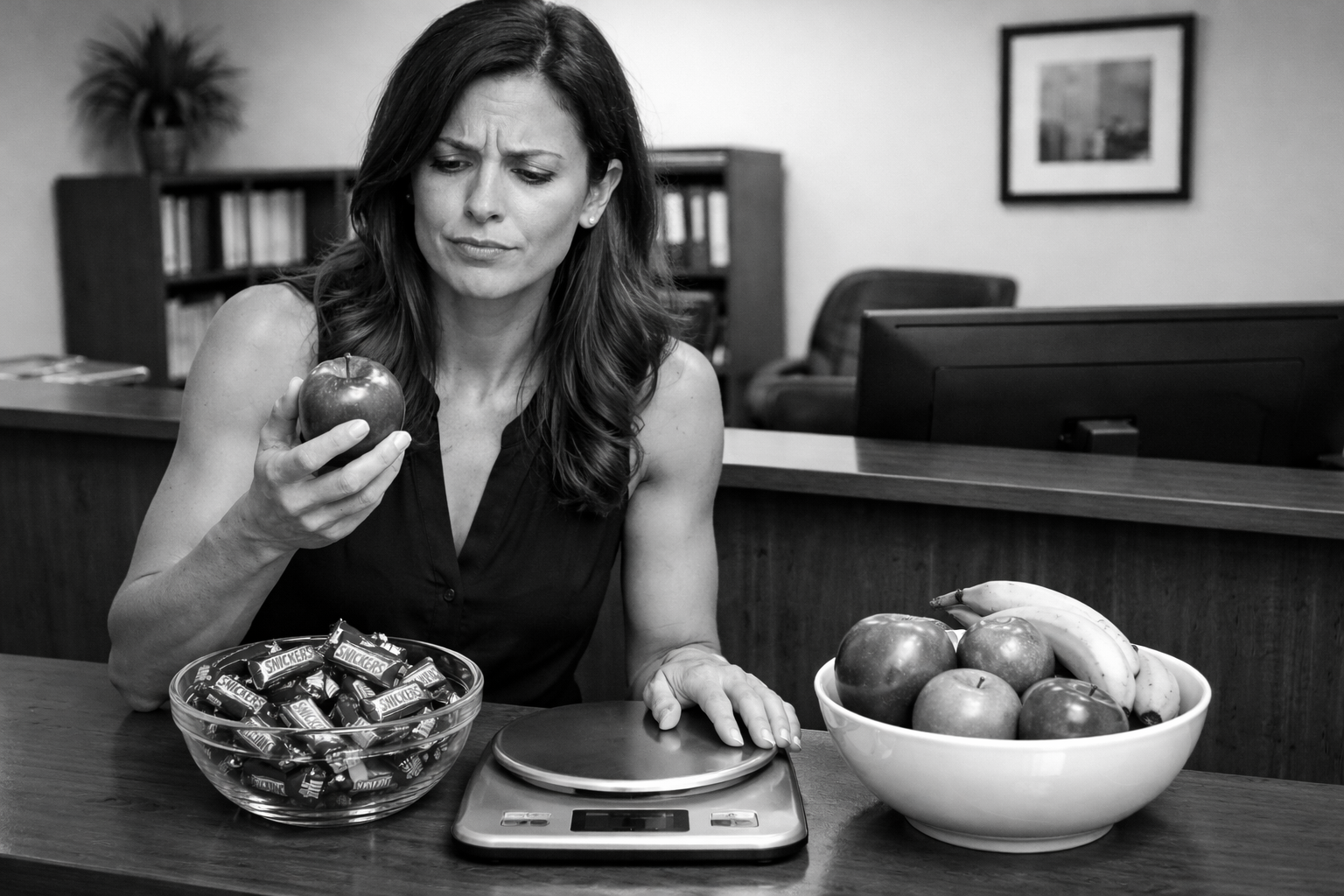
Everyone who has ever declared “I’m going to start eating healthier” has immediately been swept into the gravitational chaos of modern nutrition discourse. Keto evangelists on TikTok, carnivore hashtags on Instagram, the intermittent fasting crowd treating pancakes like a moral failure, and the never-ending vegan vs. paleo vs. raw-food celestial battle—none of it makes eating feel easier. If anything, nutrition today feels like you need a law degree, a blood panel, and a spiritual calling just to decide what’s for lunch.
At RESET, the mission is the opposite: clarity, not chaos. And nothing clarifies nutrition faster than understanding macros—what they are, why they matter, and why tracking them (even for a short season) can radically reshape your energy, your training, your body composition, and your long-term healthspan.
If you’ve ever asked, “Is an almond a carb or a fat?” this post is for you. (Trick question. It’s both. And also a gentle invitation to grieve the concept of a “serving size.”)
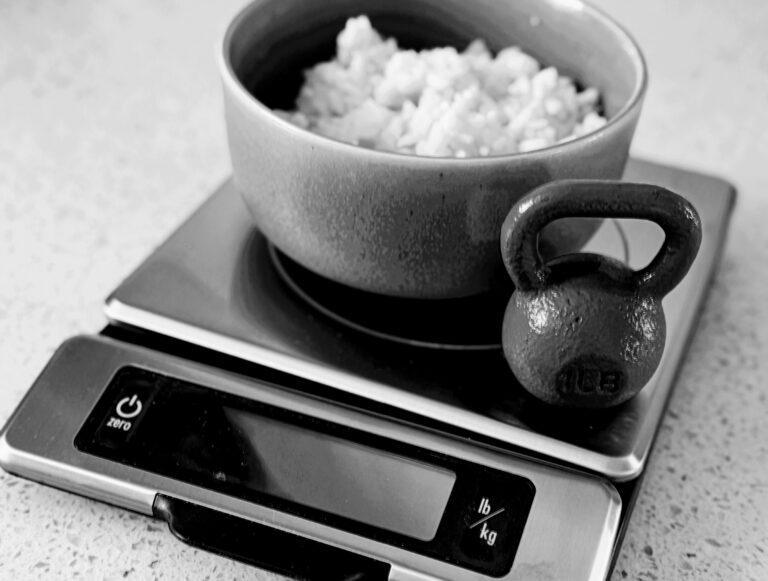
By the end of this, you’ll not only understand macros—you’ll be able to explain them to your aunt at Thanksgiving when she asks why you’re weighing turkey like a medieval pharmacist.
What Exactly Are Macros?
In the simplest terms, macros—short for macronutrients—are the big three nutrients your body uses for fuel:
Protein. Carbohydrates. Fat.
That’s it. Three categories. Not sixteen. Not whatever TikTok invented this week. Just three.
Where vitamins and minerals (micronutrients) are the fine-tuning, macros are the power systems. They influence how you build muscle, how you recover, how your hormones behave, whether your brain fires on all cylinders, how stable your mood is, whether you feel full after a meal, how well you train, and how well you age.
And none of this is speculative. It’s foundational physiology. Protein is used for structure and repair, carbs for fuel and glycogen replenishment, and fat for hormones, cell membranes, and nutrient absorption.
Understanding macros is like understanding the three departments that keep a company operational. When one fails, the whole enterprise gets wobbly.
The Role of Calories (Yes, They Still Matter)
Every macro contains calories. Protein and carbs each contain four calories per gram. Fat contains nine.
This is why a tablespoon of almond butter carries the emotional and caloric weight of a Greek tragedy.
Dr. Kevin Hall of the NIH—one of the most influential obesity researchers in the world—summed it up perfectly in his landmark 2019 Cell Metabolism study:
“Weight change is primarily about energy balance, but food environment and food composition dramatically affect energy intake.”
Macro tracking allows you to manage both: how much you eat and what your food is made of. The “what” may matter more than most people realize.
THE THREE MACROS — EXPLAINED LIKE A HUMAN BEING
Protein: The MVP
If macros were a sports team, protein is the captain that shows up early, stays late, never complains, and still asks what more it can do.
Protein repairs muscle, protects lean mass, fuels recovery, stabilizes hunger, and supports immune function. And nearly everyone is eating too little of it.
Longevity physician Dr. Peter Attia argues relentlessly:
“Protein is the single most important nutritional variable when it comes to preserving lean mass as we age.”
Muscle naturally declines—3–8% per decade after 30. Without adequate protein, the decline accelerates. With adequate protein, you preserve independence, training capacity, and metabolic resilience.
A helpful guideline: somewhere around 0.7–1.0 grams per pound of goal bodyweight. Yes, that’s more than you think. No, your current intake is not close.
Carbs: The Misunderstood Hero
Carbs have been villainized so effectively you’d think they personally foreclosed someone’s home.
But here’s the biological truth:
Your brain prefers glucose.
Your muscles—especially during CrossFit-level intensity—prefer glycogen.
Dr. Andrew Huberman puts it plainly:
“Carbohydrates are not the enemy. For many forms of training, they are your primary ally.”
Fruits, potatoes, rice, oats, vegetables, beans—those carbs improve power output, stabilize mood, support hormones, and help you recover.
Carbs are only a problem when they come in bright packaging, engineered by food scientists who list “dopamine activation” as a performance metric.
Fat: The Hormone Helper
Fat is essential for hormonal health, cell structure, long-term energy, and brain function. About 60% of your brain is fat—so yes, eating healthy fats literally fuels your ability to think clearly.
As Harvard’s Dr. Walter Willett notes:
“The type of fat you eat is more important than the total amount.”
Olive oil, nuts, seeds, avocados, salmon—fantastic.
Ultra-processed fats hiding in junk food—less fantastic.
Since fat is calorie-dense, macro tracking helps you avoid accidentally eating 700 calories of “healthy snacks” before 10 a.m.
WHY COUNT MACROS AT ALL? (AND NOT JUST “EAT CLEAN”)
1. Awareness Changes Everything
Research shows humans underestimate their caloric intake by 20–50% (Lichtman et al., 1992), and numerous studies since then have confirmed the same. We overestimate the good stuff and underestimate the fridge-door snacks we eat emotionally with the door still open.
A few weeks of macro tracking shatters illusions and builds clarity.
2. Body Composition Responds to Precision
If you want fat loss, you need a calorie deficit—but without enough protein, you lose muscle too.
If you want muscle gain, you need a surplus—but without enough protein, lifting just makes you hungry.
If you want both: macro balance is the key.
Dr. Layne Norton, one of the most influential science communicators in nutrition, says:
“Macros are the knobs you can turn to change how your body looks, feels, and performs.”
3. Training Improves Dramatically
Protein enhances recovery.
Carbs enhance performance.
Fat enhances hormonal health.
You feel the difference quickly: more energy, fewer crashes, better sleep, better mood, more consistent effort. If you want your training session to be productive instead of a slow struggle for survival, macros matter.
4. Macros Are a Healthspan Strategy
RESET’s pillar of Healthspan Focus is built on a simple truth: longevity is meaningless if your body can’t support the life you want to live.
Macros support:
- Muscle preservation
- Bone density
- Metabolic flexibility
- Cognitive function
- Hormonal health
Dr. David Sinclair, Harvard aging researcher, has argued repeatedly that metabolic resilience and muscle mass are among the strongest predictors of longer, healthier lives.
Macro awareness helps build both.
5. Structure Reduces Stress
Counting macros isn’t micromanagement—it’s clarity.
Structure doesn’t restrict your life—it frees your mind.
You know what to eat.
You know how much.
You stop guessing.
You stop bouncing between extremes.
You stop relying on willpower alone.
EC Synkowski put it perfectly:
“Consistency beats perfection. Macros provide the structure that makes consistency possible.”
WHAT COUNTING MACROS IS NOT
It is not a cult.
It is not forever.
It is not a morality test.
It is not something only athletes do.
It is simply data—information that gives you agency.
It’s financial literacy for food.
WHAT COUNTING MACROS IS
A skill.
A temporary educational tool.
A way to build confidence.
A pathway to seeing real progress.
A structure that aligns your daily behavior with your long-term goals.
It’s not about restriction. It’s about understanding.
HOW TO ACTUALLY START
You can do this alone, but it’s easier—and far more successful—with coaching.
- Determine your macro targets (customized > calculators).
- Use a tracker (Cronometer, MacrosFirst, MyFitnessPal).
- Start by hitting your protein goal.
- Review weekly.
- Adjust intentionally, not emotionally.
- Ask for help when needed. RESET exists for exactly this reason.
HOW TO EXPLAIN THIS TO YOUR AUNT CAROL
Macros = protein + carbs + fat.
They provide calories.
Tracking them reveals the truth about your eating.
Adjusting them changes your body composition.
Balancing them improves your training.
Mastering them extends your healthspan.
Doing them with RESET is easier than doing them alone.
THE FINAL WORD: INFORMATION ISN’T OBSESSION—IT’S OWNERSHIP
Macro tracking isn’t about obsessing over food. It’s about learning your body, taking control, and building habits that create a long, capable life.
It’s one of the clearest bridges between the choices you make today and the future you’re building tomorrow.
If you’re ready to stop guessing…
If you’re ready to align your nutrition with your training…
If you’re ready to make your workouts count…
RESET is ready to help.
Because we’re not just the best gym in San Diego—we’re the place where clarity replaces confusion, where community replaces overwhelm, and where macros become momentum.