.webp)
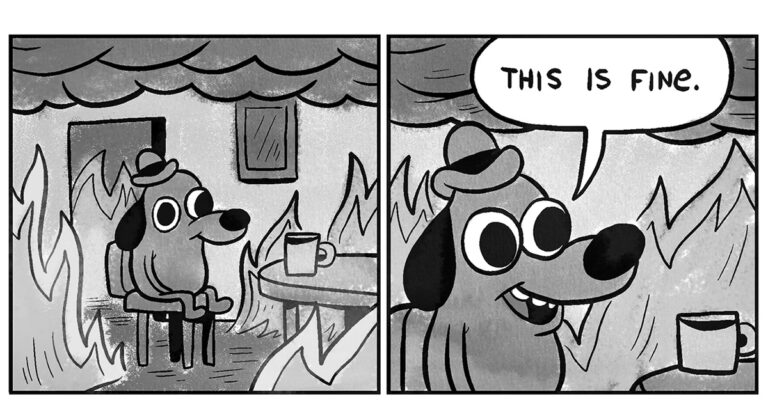
Yesterday I sent my girls to the grocery store to grab a few things for dinner. Nothing complicated. A couple staples, a few extras, and a handful of candied pecans for a salad I had in mind.
There was a brief moment, right after I said “handful,” where I realized I had made a mistake. “Handful” is not a real unit of measurement. It certainly isn’t a scientific one by any stretch of the word. My hands are not their hands. They have little girl hands. Literally. I assumed they would compensate by grabbing a couple of handfuls, maybe err on the side of generosity. Worst case scenario, they come home with a single child-sized portion and the salad is a little light on pecans. Not ideal, but not exactly a crisis.
What I failed to consider is that they might interpret “handful” as my handful. And that fathers in the eyes of their children are beings straight out of the pantheon. And that I possess the palm size and wingspan of an NBA center. They came home with what I can only describe as every pecan, from every Sprouts in San Diego. My eldest has my apple card on her phone for situations such as this and I briefly considered turning off Apple Pay on her phone after seeing the the text alert for “unusual spending.”. It was close. Ultimately, I chose restraint. Personal growth and all of that.
I also chose to eat a meaningful portion of those pecans while preparing what was supposed to be a balanced, healthy salad. Because roasted nuts are a red flag food in this house.
A red flag food is not inherently bad. It’s not forbidden, and it’s not something that needs to be eliminated from the world. But for you, specifically, it is a problem. It’s the food where the normal rules quietly stop applying. You tell yourself you’ll have a small amount, and then, without much ceremony, you’re halfway through the container wondering how that happened. Not everyone has red flag foods, but if you do, you don’t need a list. You already know. For some people it’s nuts. For others it’s chips, ice cream, cereal, peanut butter, trail mix. Foods that are easy to start and strangely difficult to stop. I have a red flag food that is generally healthy but I can consume it in unhealthy amounts. Green grapes. Delicious, nutritious, and carb dense like you wouldn’t believe. Seems like a celery situation and it is mostly water but honestly it hits more like juice in terms of how many grams of carbs you can consume in a very short time without even noticing.
This isn’t about discipline, and it isn’t about weakness. It’s about biology. Certain foods are very good at doing exactly what they were designed to do. Whether engineered in a lab or assembled in a kitchen, combinations of fat, sugar, and salt light up the brain’s reward system in a way that makes moderation less likely. Neuroscientist Stephan Guyenet has written extensively about this, explaining how highly palatable foods can override the signals that normally tell us we’ve had enough. The body isn’t malfunctioning. It’s responding as expected.
Research backs this up. In a widely cited study published in Cell Metabolism, Kevin Hall and his colleagues at the NIH found that participants eating ultra-processed foods consumed significantly more calories than when they ate minimally processed foods, even when the meals were designed to be similar in calories and macronutrients. The difference wasn’t intention. It was response. The food changed how much people ate without them realizing it.
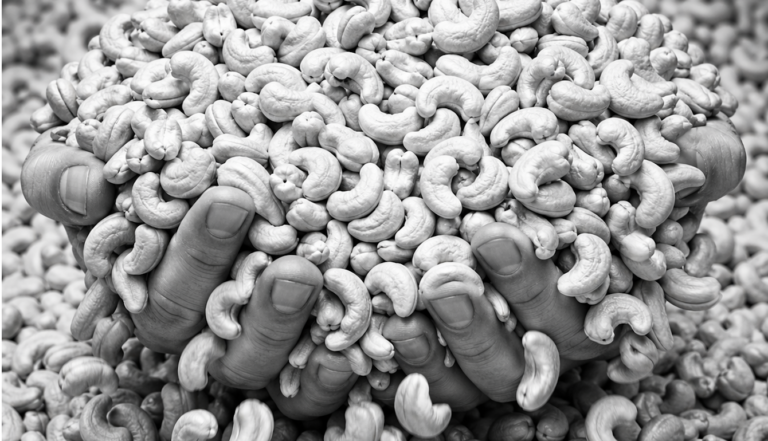
Candied pecans may not come in a crinkly package with a cartoon mascot, but they hit a similar profile. Dense, sweet, rich, easy to keep eating. Once they’re in the house, the outcome is fairly predictable. And the pecans were a one off. Roasted, salted cashews in the football helmet sized container from Costco? That is a whole other story. The more interesting question is why we continue to bring these foods into our environment with the belief that this time will be different.
There is a very human optimism at play. This time I’ll just have a little. This time I’ll be more controlled. This time I’ll prove something to myself. And sometimes that works, briefly. But over a long enough timeline, patterns tend to repeat. Gretchen Rubin, in her work on habits, draws a useful distinction between people who moderate easily and those who do better abstaining. For the latter group, the effort required to have “just a little” is far greater than the effort required to have none at all. The mental negotiation alone can be exhausting.
This is where our curated environment quietly becomes more powerful than willpower. James Clear writes in Atomic Habits that behavior is often a product of context. What is available gets used. What is visible gets consumed. If a red flag food is sitting in your pantry, it requires almost no effort to eat it. If it isn’t there, the friction increases. You would have to decide you want it, leave the house, go to the store, and buy it. That small barrier is often enough to change the outcome.
The challenge is that the consequences of these decisions are rarely immediate. You don’t gain five pounds overnight because of a handful of pecans. What happens instead is quieter. An extra hundred or two hundred calories here and there. A small surplus repeated often enough that it becomes meaningful. Over the course of a week, it’s easy to erase a deficit. Over the course of a month, it’s enough to stall progress entirely. Over the course of a year, it’s how people find themselves twenty pounds heavier without a clear moment when it happened.
This is why fat loss can feel confusing. You’re doing most things right. You’re training. You’re making better choices. But small, consistent deviations—especially around foods that are easy to overeat—can cancel out a lot of good work. It isn’t dramatic. It’s cumulative.
None of this is an argument for perfection. The goal is not to remove all enjoyable food from your life or to create a system so rigid that it collapses under its own weight. The goal is to create an environment that makes the right decisions easier and the wrong ones less frequent. There is a difference between choosing to enjoy something and repeatedly finding yourself over-consuming it out of habit.
For many people, the simplest and most effective strategy is not complicated. If a food consistently leads to outcomes you don’t want, don’t keep it in the house. That doesn’t mean you can never have it. It just means you don’t live with it. If you want it, go get it, enjoy it, and move on. But don’t surround yourself with it daily and expect a different result.
We still had the salad. It was good. It had protein, fiber, color, texture, and a very generous portion of candied pecans. And it served as a reminder, once again, that certain foods don’t belong in regular rotation in my kitchen. Not because they are bad, but because I am predictable.
If the goal is to look better, move better, and feel better, what you eat matters. Not in a moral sense, but in a practical one. You don’t have to get it right all of the time, but you do have to be honest about what tends to go wrong. Progress rarely comes from doing everything perfectly. It comes from setting yourself up to do the right things more often.
Sometimes that starts with a better definition than “handful.”