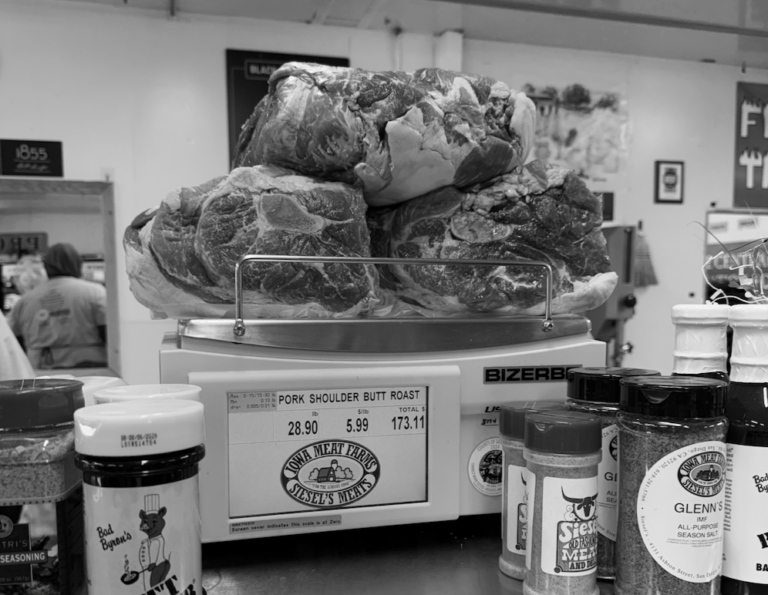
.webp)
On the challenging and sometimes seemingly never ending journey that is fat loss there is a super-villain archnemesis working to outwit you at every turn. It isn’t carbs. It is not refined sugars. It’s not even nut butters, alcohol, or ultra-processed foods.
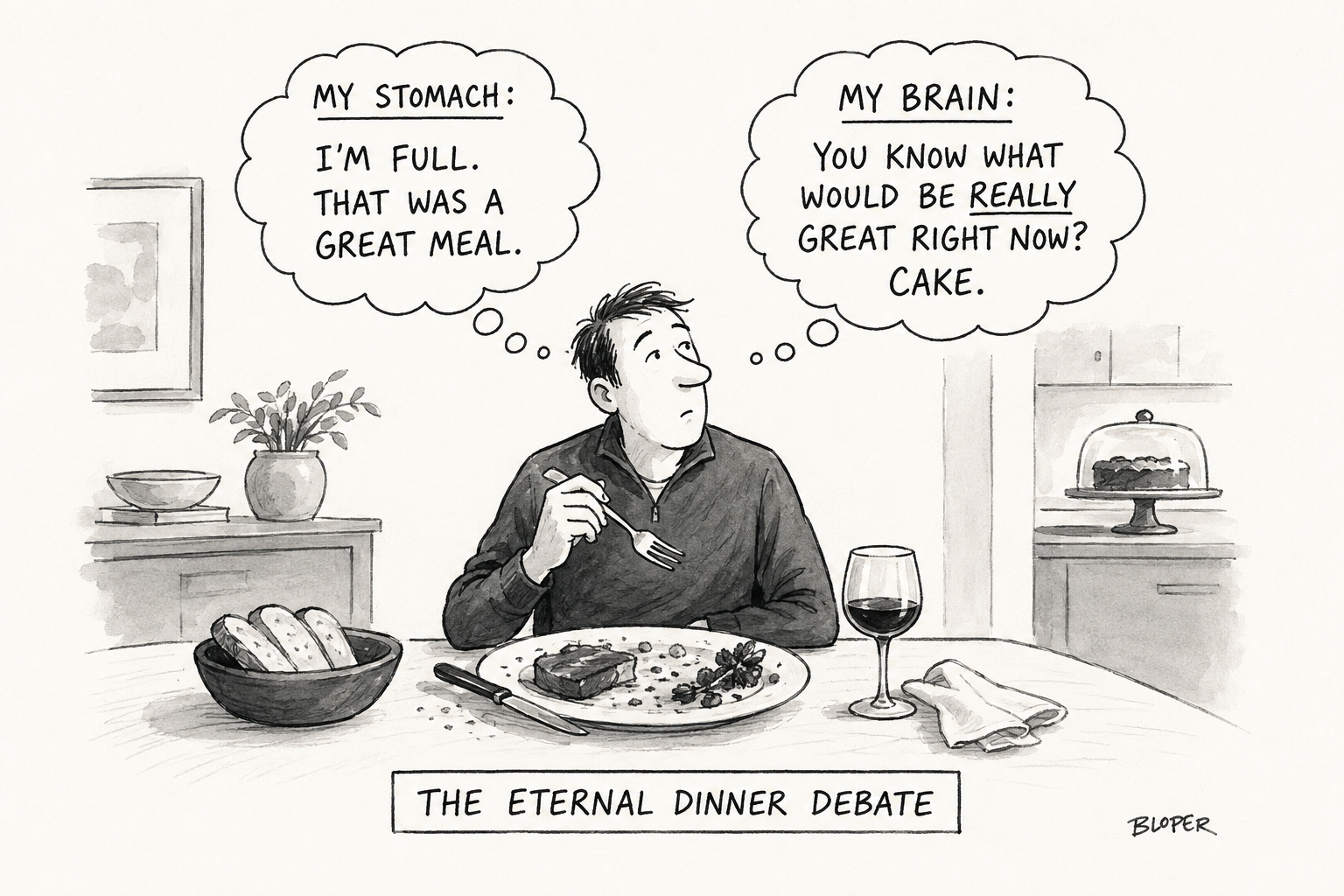
It is eyeballing. Your eyes, but more specifically your brain is SO SO SO BAD at estimating quanities. Your brain is borderline lying to you. I say borderline lying because there is a part of your brain that really is trying and there is another part that says, 2 tablespoons of almond butter is definitely a little bigger than that, a little more…and just a little more. And you believe that part.
Most people do not fail at fat loss because they lack discipline. They fail because they are estimating. And human beings, across education levels and personality types, are terrible at estimating. Like epicly bad. And this isn’t just about food. How much you can get done in a day, a week or a year. How good of a parent you are going to be, Parallel parking. What time you need to leave the house to get places on time. But those are conversations for another day. Let’s stay focused on food for now.
Before we get to the meat(pun intended) of this conversation, we need to draw a distinction that is often blurred beyond usefulness. Fat loss is not the same thing as weight loss. Weight loss is simply a reduction in total mass. We are talking about the number on the scale just in case the term “ mass” confuses the message. That mass might be fat. It might be muscle. It might be water. The number on the sale is indifferent to quality. Fat loss, on the other hand, implies intention. It implies a reduction in body fat while preserving or even adding lean muscle tissue. Those are very different physiological, and psychological, outcomes, and they require very different levels of precision.
At RESET we care about fat loss, not just weight loss. We care about body composition because muscle is metabolic insurance. You have probably heard two common terms about muscle. Muscle weighs more than fat. And muscle burns more calories than fat. Why are these terms relevant? Muscle is much more densely packed than fat and the actual fibers are laid down in a much more aesthetically pleasing fashion. There is a reason those epic greek statues are so pleasing to the eye. The great sculptors capture the essence of human muscle and at times it can appear as if they have captured it in motion. And circling back to that metabolic insurance, at rest muscle burns 3x the number of calories as a pound of fat. And because fat almost never “works,” when we put that beautiful functional muscle tissue into action it can burn almost 5x the calories of fat. And there is so much more that lean tissue does to keep the body working well. It protects insulin sensitivity and our joints. It is the source of our force generation and preserves strength as we age which is directly correlated to independent living. Experts like Peter Attia and Rhonda Patrick have been consistent on this point. Muscle mass is one of the strongest predictors of healthspan. If you lose muscle in pursuit of a lower number on the scale, you are trading long-term resilience for short-term validation.
We get the question all of the time, “how do I lose weight?” We think a better question is “how do I become leaner while preserving strength and performance?” It’s a mouthful to be sure. Put more simply, “how can I lose fat and maintain as much muscle as possible?” That is where intake begins to matter in a way that feels uncomfortable but necessary.
There are several pathways to getting leaner. You can lose fat while maintaining muscle. You can gain muscle while holding fat steady. And the Holy grail of getting jacked would be the elusive recomposition of losing fat while GAINING muscle. Each pathway has its own demands. Losing fat requires a calorie deficit. Gaining muscle requires sufficient protein and progressive overload. Recomposition requires careful alignment of both.
The more specific the goal, the more important nutritional precision becomes. This is where weighing and measuring enter the conversation. It is not a punishment, and it shouldn’t become an obsession. It is a calibration.
We have decades of research demonstrating that humans underestimate their intake. A study in the New England Journal of Medicine by Lichtman and colleagues found that individuals who believed they were eating roughly twelve hundred calories per day were in fact consuming nearly twice that amount when measured objectively. More recent reviews in journals such as Obesity confirm the pattern. Underreporting is not rare. It is the default for almost everyone. This includes you.
This is not a moral failing, it is simply a cognitive bias. We underestimate portion sizes, particularly with foods that are calorie dense and highly palatable. Put simply, the more delicious something is, the more of it we will generally eat, and the worse we are at estimating how much. Pasta, rice, oils, nut butters, trail mix. These foods are compact but energetically expensive. It is remarkably easy to overshoot by one hundred calories per meal without realizing it. Over the course of a day that becomes three hundred calories. Over a week that becomes two thousand. Over a month that erases what would otherwise have been meaningful progress.
Weighing and measuring interrupt that drift.
Using a food scale for even two to four weeks changes how you see food. You learn what four ounces of chicken and a tablespoon of olive oil actually looks like. Spoiler alert, you probably do to eat a little more chicken and a little less butter. You realize that what you once considered a serving of rice is closer to two or three. Every time I show someone what one serving of pasta looks like they die inside a little. The first time many people weigh peanut butter they experience a mild existential crisis. That crisis is not discouraging. It is clarifying.
Layne Norton often reminds people that adherence improves when you remove guesswork. Precision can reduce anxiety because you know exactly where you stand. You do not have to rely on vibes or hunger signals distorted by months or years of inconsistent intake. You replace estimation with information.
Protein is perhaps the most important macro in this entire conversation. During fat loss, adequate protein preserves lean mass, supports recovery, and increases satiety. Leidy and colleagues in the American Journal of Clinical Nutrition demonstrated that higher protein diets improve appetite control and help maintain muscle during calorie restriction. Protein also has a higher thermic effect than carbohydrates or fat, meaning your body expends more energy digesting it. Yet when people try to eat less, protein is often the first thing that falls.
Weighing and measuring protein can be transformative. Hitting your minimum daily target can change how you feel, how you recover, and how your body responds to the work you are putting in. Many people discover that they are dramatically under-consuming protein once they measure it honestly. Attia has pointed out that losing weight without preserving muscle is a metabolic liability. Measuring helps prevent that mistake and keeps you moving toward your goals.
The density of food matters as well. A plate filled with vegetables, lean protein, and fruit can be substantial in volume while moderate in calories. A small handful of nuts can equal the same caloric load with a fraction of the satiety. Kevin Hall’s 2019 study in Cell Metabolism demonstrated that participants consuming ultra-processed foods ate significantly more calories than those eating minimally processed foods, even when macronutrients were matched. Volume, fiber, texture, and palatability influence intake in ways we underestimate. Measuring makes those influences visible. A baked potato with a tablespoon of butter, a cup of green beans, and 5 ounces of chicken has the same number of calories as 1 sleeve of thin mints. And forget about the robust nutrients in the healthier option. And let’s be honest. No one stops at one sleeve. We are lucky to stop at one box. Let’s be real, the Girl Scouts’ whole model is built on nimiety.
This is true whether you are counting calories, tracking macros, limiting carbohydrates, or trying to hit a protein range. In every case, awareness of quantity determines outcome. If you are attempting a modest deficit but unknowingly consuming several hundred calories beyond your target, the strategy fails not because your metabolism is broken but because your math is.
None of this means you must weigh and measure forever. For many people it is a season of education. After several weeks of consistent tracking, portion awareness improves dramatically. You begin to recognize what thirty grams of protein looks like on a plate. You develop a sense of how much oil is too much. You can transition toward a more flexible approach informed by actual experience rather than hope. And maybe once a year you pick up the habit again in order to recalibrate.
There is resistance to this process because it feels tedious and restrictive. If stripped of context it can certainly feel obsessive, but there is also something grounding about it. In a culture saturated with nutritional noise and polarized ideologies, measuring is quiet and objective. It is not glamorous and it will probably never be trending, and you will not feel like a biohacker. It will, however, work.
Fat loss is about alignment, and not about suffering. We need to align our intake with our intention. If the goal is simply to see a smaller number on the scale, precision may feel like it is optional. But, if the goal is to become leaner while staying strong, capable, and metabolically healthy, precision becomes our superpower.
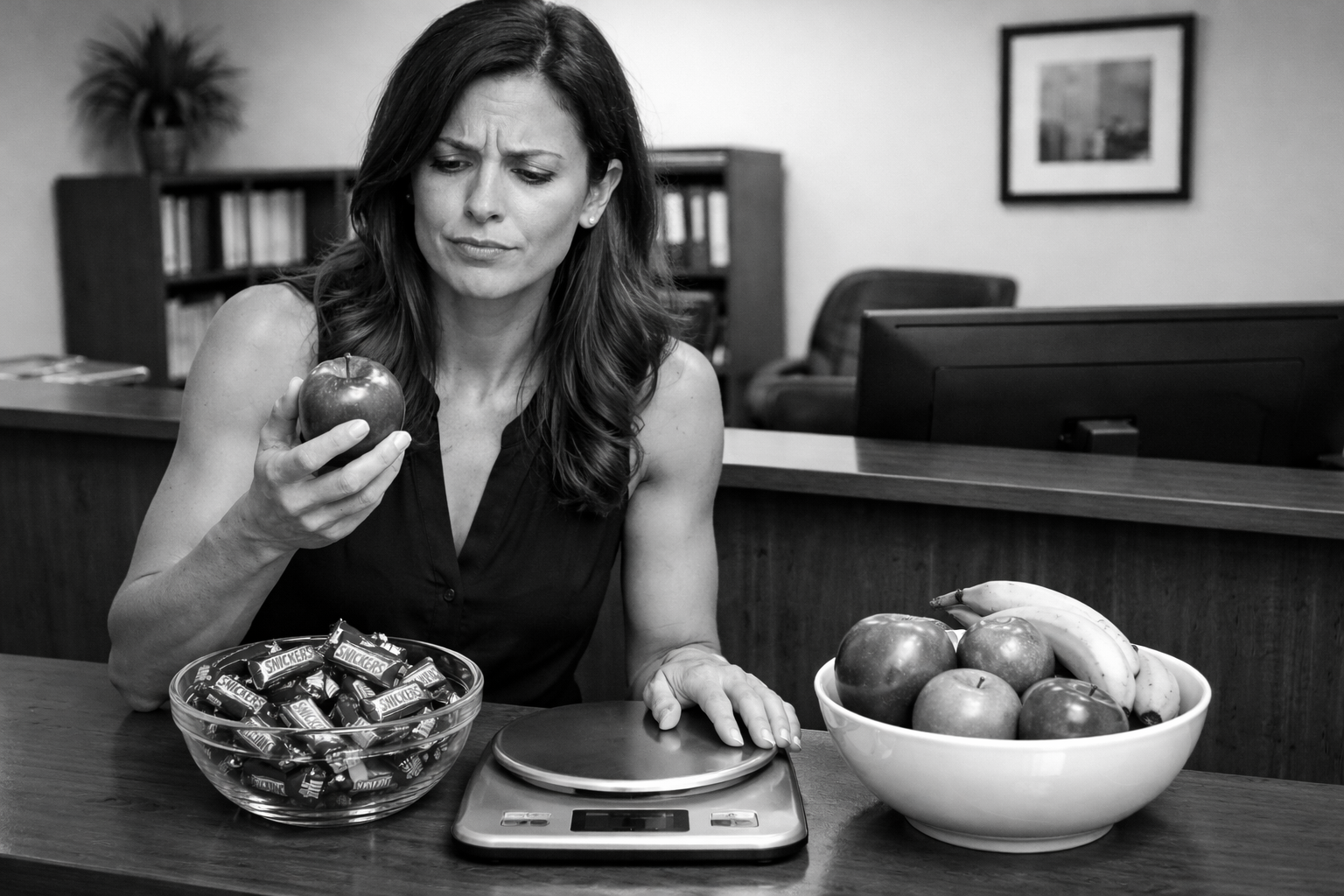
The margins in body composition are small. A slight calorie deficit sustained over time produces fat loss. A slight surplus sustained over time produces gain. Those margins can be erased by consistent underestimation. Weighing and measuring protect the margin. A wild real world example exists in offices around the world. The bane of health and fitness focused people everywhere. The candy bowl at reception. The smallest sized snickers bar is called the mini. It has less than 50 calories. Just one of those tiny treats per day for a whole year is equivalent to about 4.5 pounds of fat. It is how we can find ourselves twenty pounds heavier after a challenging season of life and have no idea how it happened. Little by little. And since it took us a few years to get here it should come as no surprise that it might take some real effort to turn things around and it won’t happen overnight.
At RESET we are not chasing rapid transformations. We are building healthspan. We are building bodies that move well, recover well, and last. Sometimes that process begins not with a heroic training session but with a small digital scale on the kitchen counter.
It is not sexy, it is occasionally annoying, but it is also often illuminating.
And for most people, it is the difference between hoping and knowing.